Interview Prep
The Screener Interview Guide
A screener is a short first-round interview. The challenge is not fitting your whole life into 20 minutes. It is giving the firm a few clear reasons to keep talking.
Updated August 8, 2026 · 5 min read
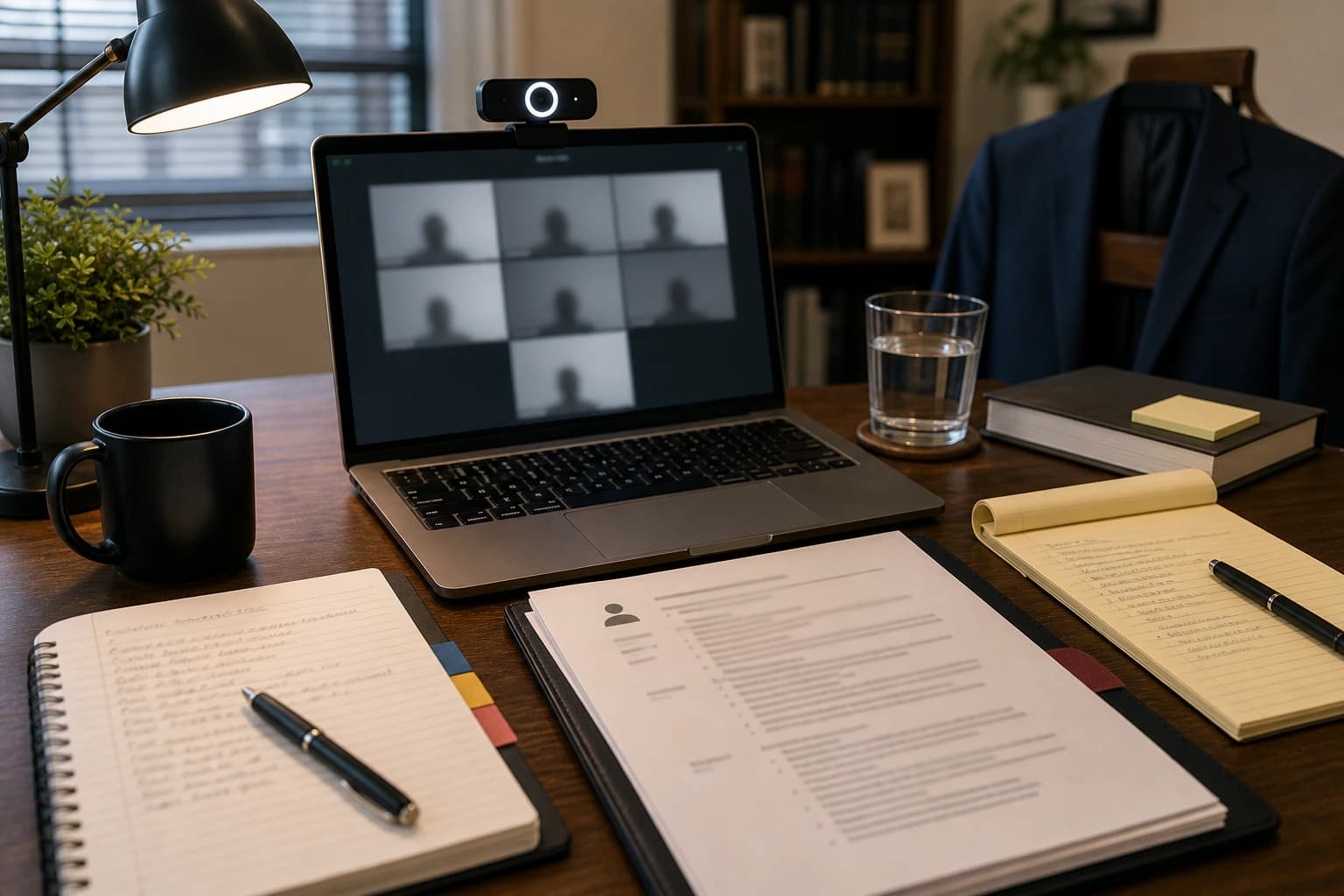
A screener is the short first-round interview in law-firm recruiting. It often lasts about 20 to 30 minutes and may happen virtually, at a school program, in a hotel, or at the employer's office.
If you are participating through OCI, remember that OCI means on-campus interviewing, even though the interview may not happen on campus.
The screener has one basic purpose: should the firm invite you to a longer callback interview with several lawyers?
You do not need to prove everything about yourself in one conversation. You need to make the next conversation feel worthwhile.
What the interviewer is trying to learn
Most screeners are not technical. The interviewer is usually asking some version of five questions:
- Can this person explain their background clearly?
- Did they make an informed choice to interview with this office?
- Can they hold a comfortable professional conversation?
- Do their interests fit something the office actually does?
- Is there any reason not to invite them back?
That last question matters. A screener is short, so obvious problems carry weight: arriving late, knowing nothing about the office, talking over the interviewer, sounding openly uninterested, or giving answers that contradict your application.
The good news is that avoiding those problems is completely within your control.
Prepare four things, not forty
Your 90-second story
Be ready to explain where you came from, why you chose law school, and what you are exploring now. This is not a speech you recite. It is a map that lets you answer "Tell me about yourself" without starting at birth.
A normal structure is:
"Before law school, I worked in financial operations, which made me curious about how businesses make decisions under pressure. At law school I have enjoyed contracts and writing, and I am exploring corporate and restructuring work. I am especially interested in Chicago because..."
Specific enough to create questions. Short enough to leave room for them.
Two experiences
Choose two resume items you can discuss beyond the bullet points. For each one, know the problem, what you personally did, and what changed.
The experience does not need to be legal or prestigious. A service job, student organization, research project, or difficult team assignment can show judgment and communication.
Why this office
Research the office, not only the firm's national homepage. Know the major practices, the size and role of the office, and one reason the market makes sense for you.
Your reason can be exploratory. "I want to test both litigation and investigations, and this office gives summers exposure to both" is stronger than pretending you have wanted to do white-collar defense since middle school.
Three real questions
Prepare questions you would still ask if the interview had no effect on your candidacy. Good topics include staffing, feedback, practice assignment, office collaboration, and how junior work changes over time.